Contextual commenting for a 3D CAD platform
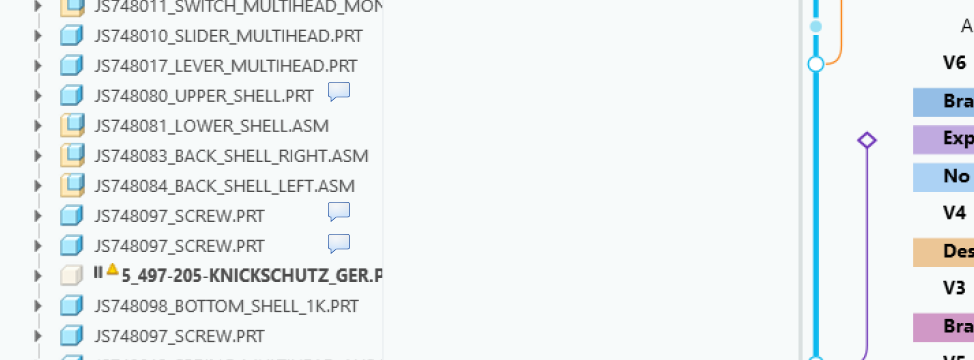
I designed Creo+'s first in-context commenting model, letting engineers discuss a design pinned to the exact part they are looking at. The interaction pattern became the foundation for PTC Jetstream, the company's 2026 headline product.
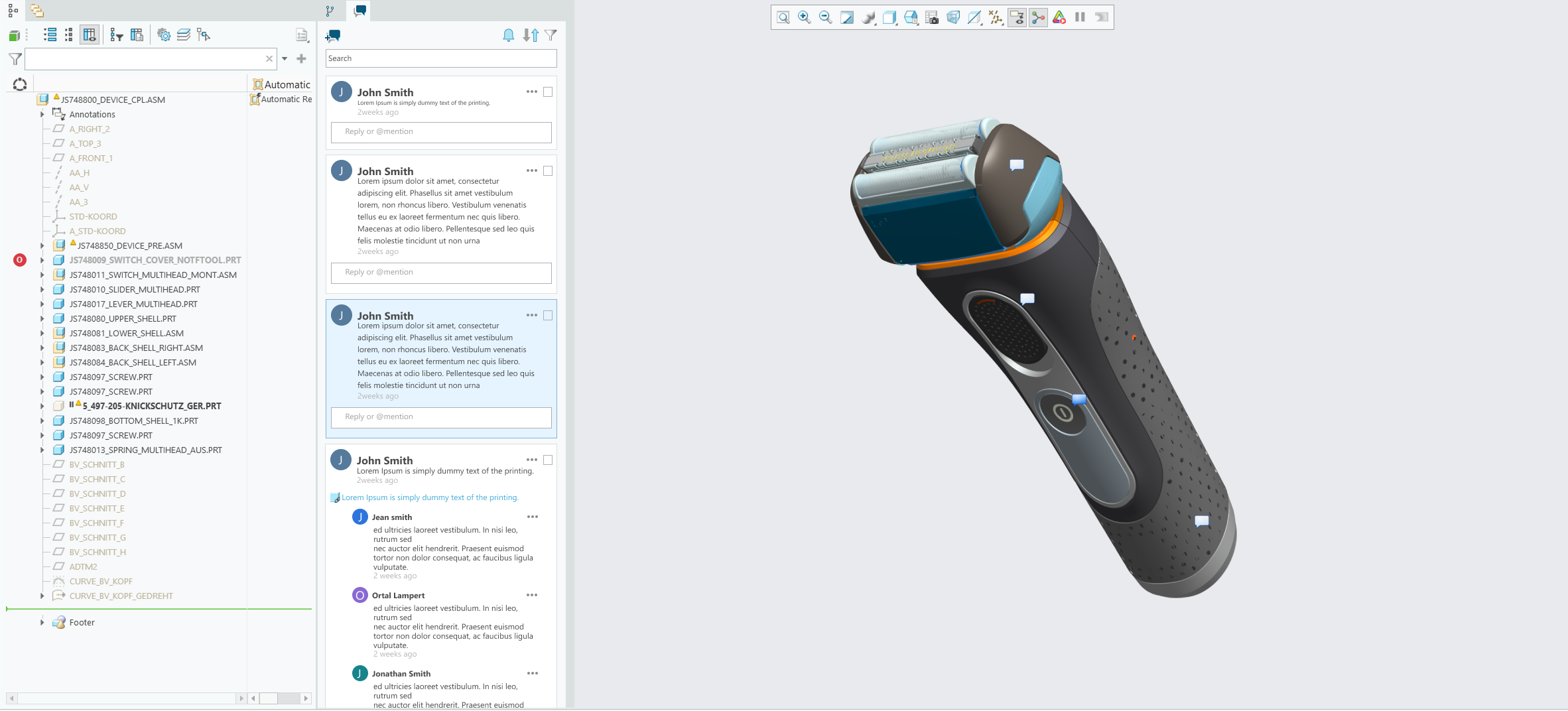
Design feedback lived everywhere except the design.
Engineers reviewing a CAD assembly had no way to leave feedback on the model itself. Comments happened in email, in meetings, and in exported screenshots marked up by hand. By the time a note reached the designer, the context, which part, which version, which constraint, was already lost.
The cost was rework and ambiguity. A single review cycle could scatter across a dozen disconnected threads, and nobody could tell which feedback still applied to the current state of the model.
What the review process actually looked like
I ran interviews and workflow observations with engineers and design leads across three product teams, then mapped the real path a piece of feedback took from reviewer to resolution.
Anchor the conversation to the object
The core idea was simple and it drove every decision: a comment is not a message, it is a relationship between a person and a specific part at a specific version. Once the reference is first-class, the thread can travel with the model instead of away from it.
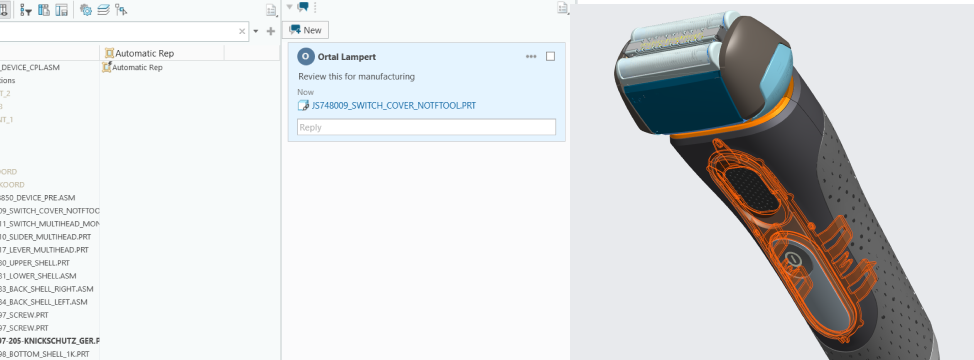
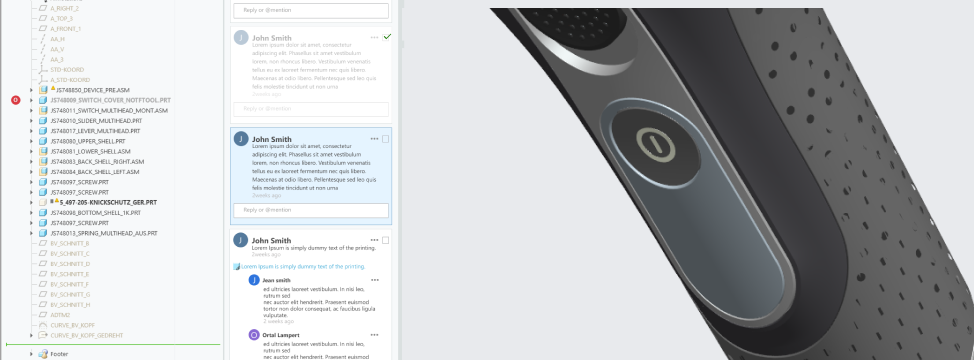
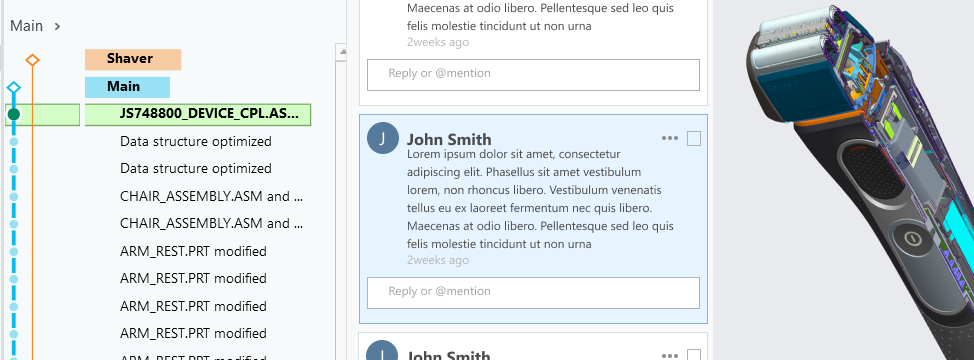
The model became Jetstream's architecture
When PTC began building Jetstream, its cloud collaboration platform, the team needed a way to attach conversation to any object, not just CAD parts. The commenting model I designed already treated the reference as the primary unit, so it generalized cleanly from a part to any entity in the system.
What shipped as a Creo+ feature became the pattern the platform standardized on. The same anchoring, version-awareness, and resolution logic now underpins collaboration in PTC's 2026 headline product.