A history graph for CAD design evolution
I designed a visual history and audit trail for Creo+, so engineers could see how a model changed, who changed it, and why, and safely return to any point in its evolution.
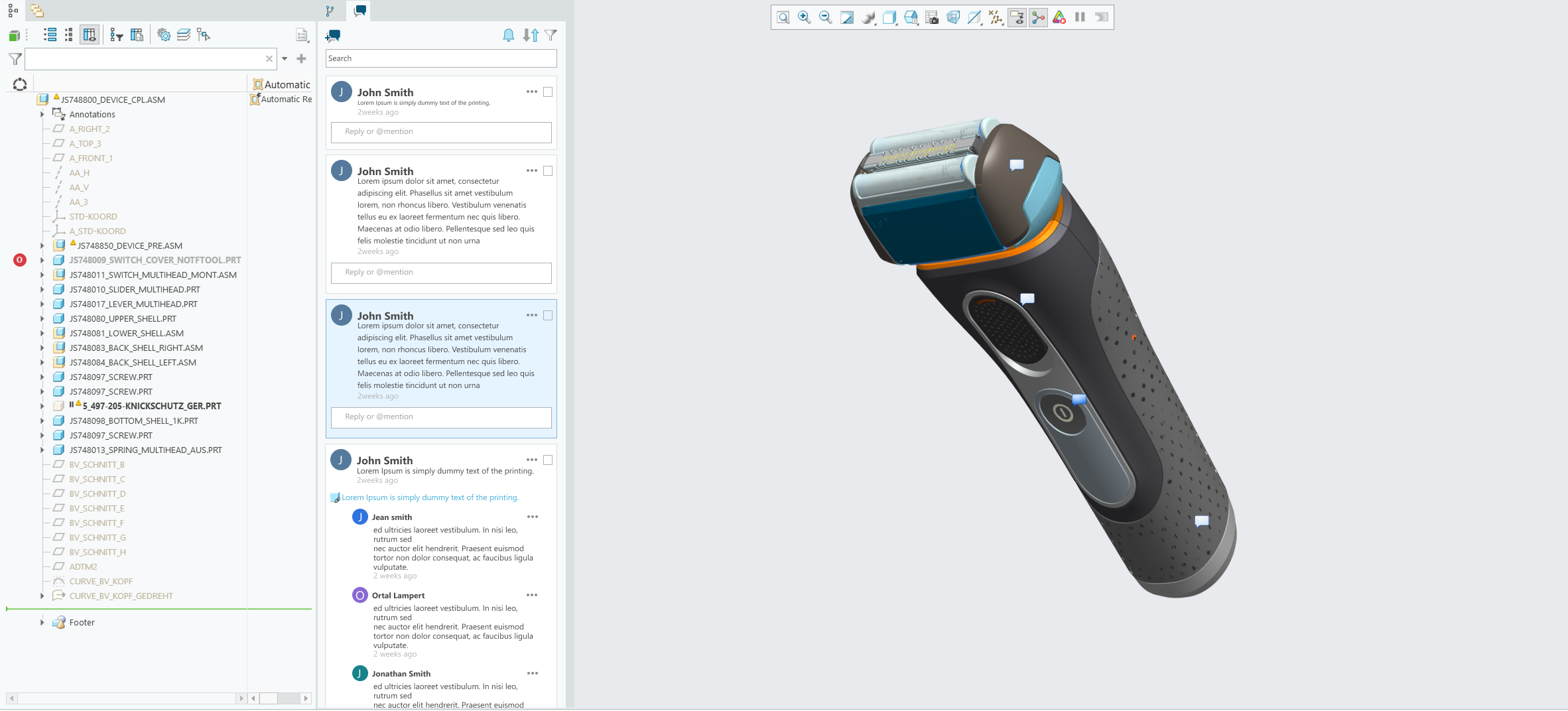
Nobody could tell the story of how a model got here.
CAD models evolve through hundreds of operations, across multiple engineers, over months. The existing history was a long linear list of features with no sense of time, authorship, or intent. When something broke, tracing the cause meant scrolling and guessing.
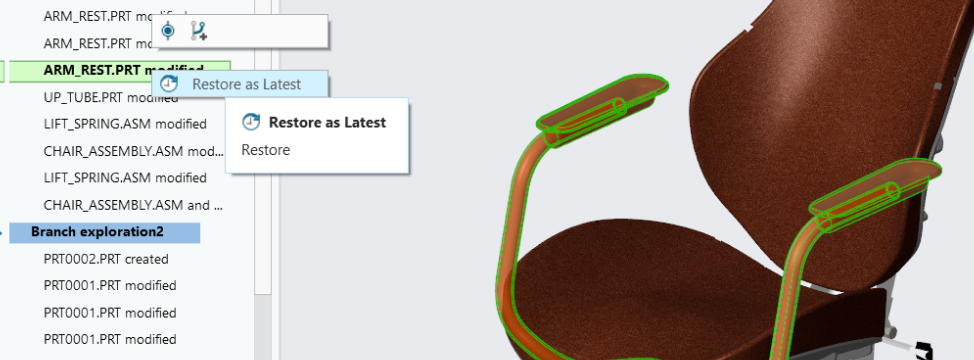
Reverting was worse. Rolling back to fix an early mistake risked discarding everything built on top of it, so engineers avoided it entirely and worked around problems instead.
How engineers reason about change
I studied how engineers investigate a model's past, what questions they ask when something goes wrong, and where the existing history left them stranded.
Turn a list into a graph you can read
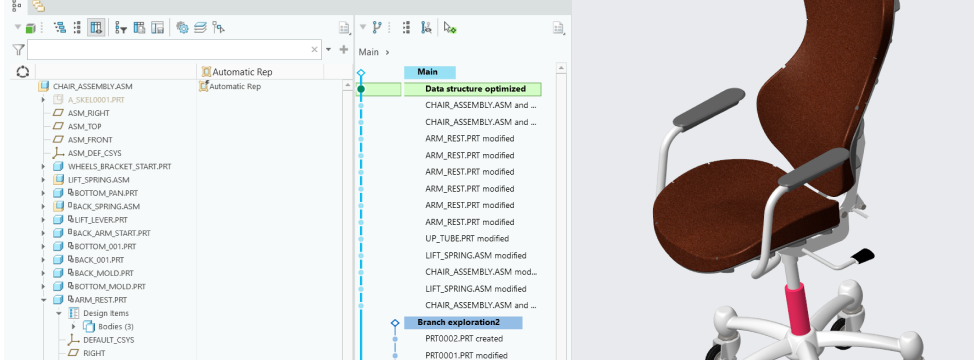
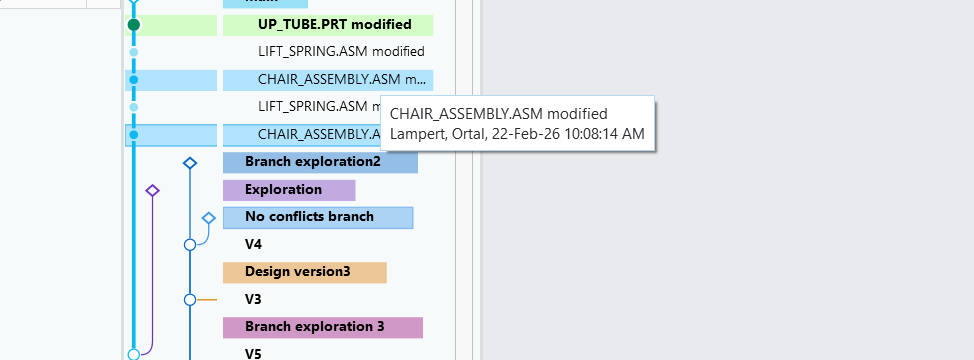
The design reframed history as a time-based graph. Structure, authorship, and consequence became visible, and every action carried a clear preview of what it would affect.

Traceability as a platform principle
The history graph shared a foundation with the contextual commenting work: both treat the record of a change as a first-class object, tied to a specific state and author. Together they pushed Creo+ toward traceability by default.
That same principle, versioned, attributed, recoverable, carried forward into how PTC thought about collaboration and governance across the platform.